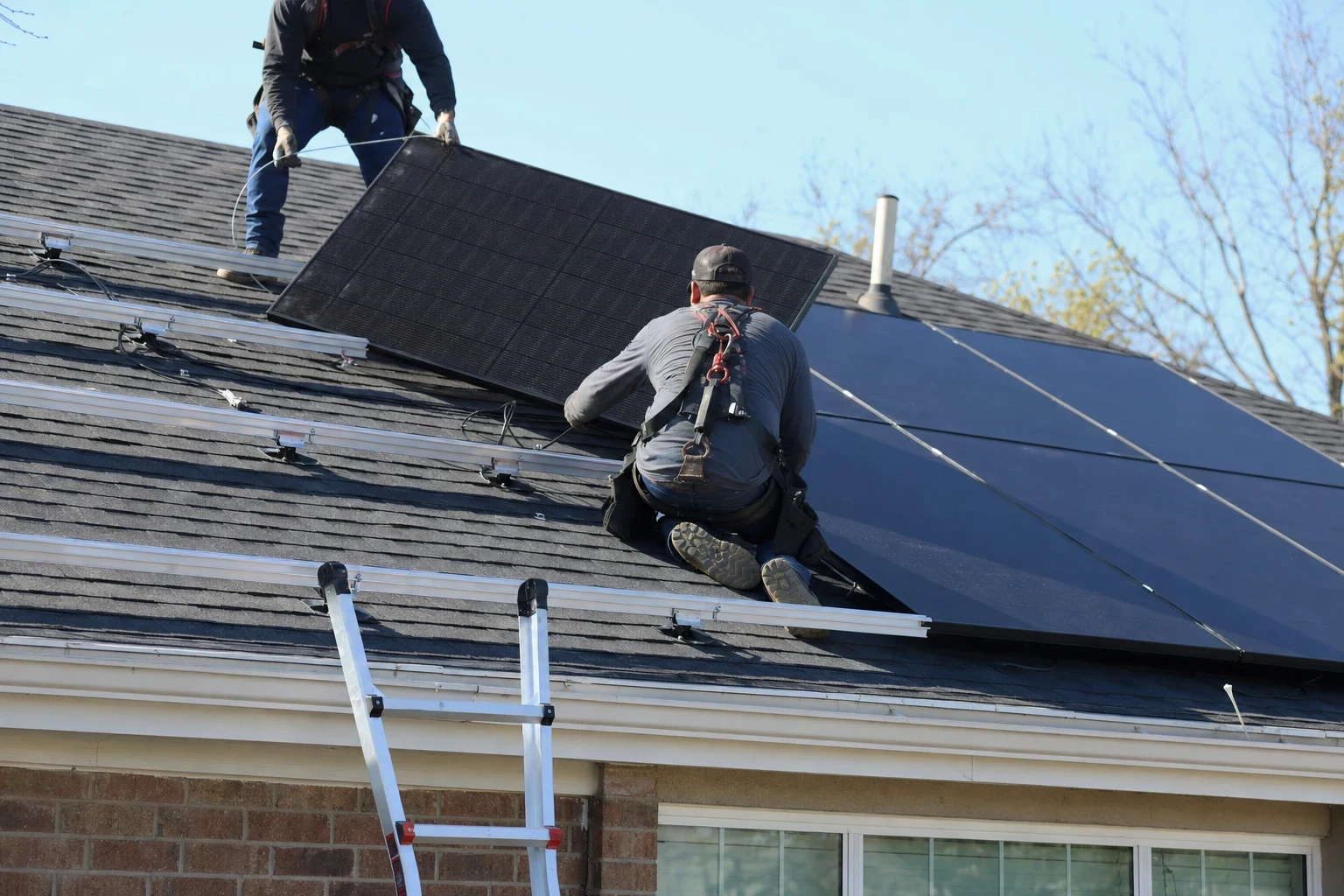
Solar Installation and Storm Repair in Allen
We install solar panels and battery storage, and we repair systems after hail, wind and electrical faults knock them offline. Every inspection comes with photos and a written explanation of what failed and why. We work on homes across Allen, Plano and McKinney, on systems we built and ones we didn't.
- Photos of every finding
- Written line-item estimates
- Honest repair-or-replace answers
- Permits pulled for you
Solar Services for Your Home
We handle five kinds of work: solar panel installation, roof-mounted solar, battery storage, solar repair and panel cleaning. New systems are designed around your roof planes, your electrical panel and your usage history. Repairs start with finding the actual fault, whether that is a cracked module, a chewed wire or an inverter throwing a ground-fault code. Cleaning is scheduled around dust and pollen buildup, not sold as a monthly habit.
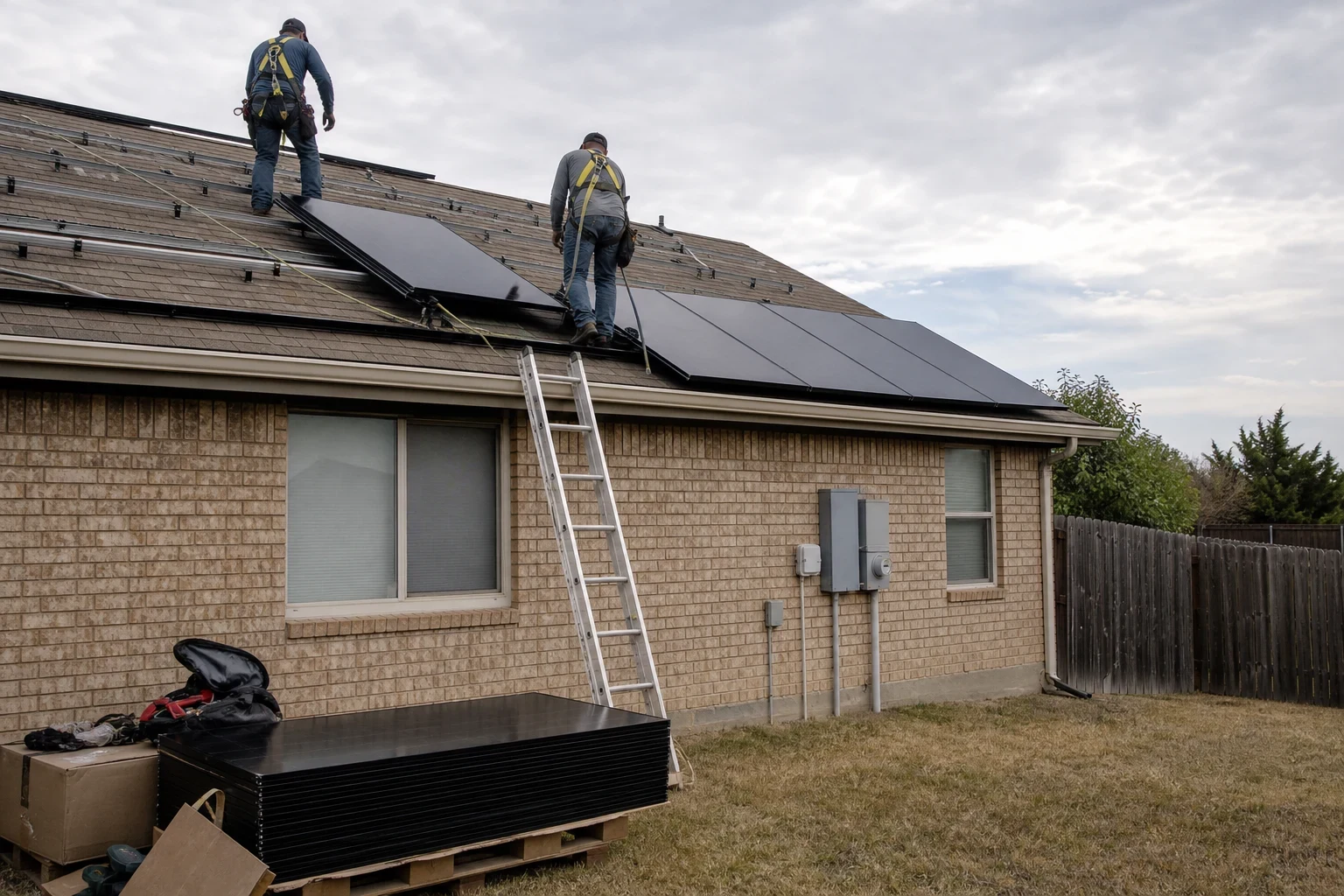
Solar Panel Installation
New solar systems designed around your roof, your electric use and North Texas storms, from structural check to permission to operate.
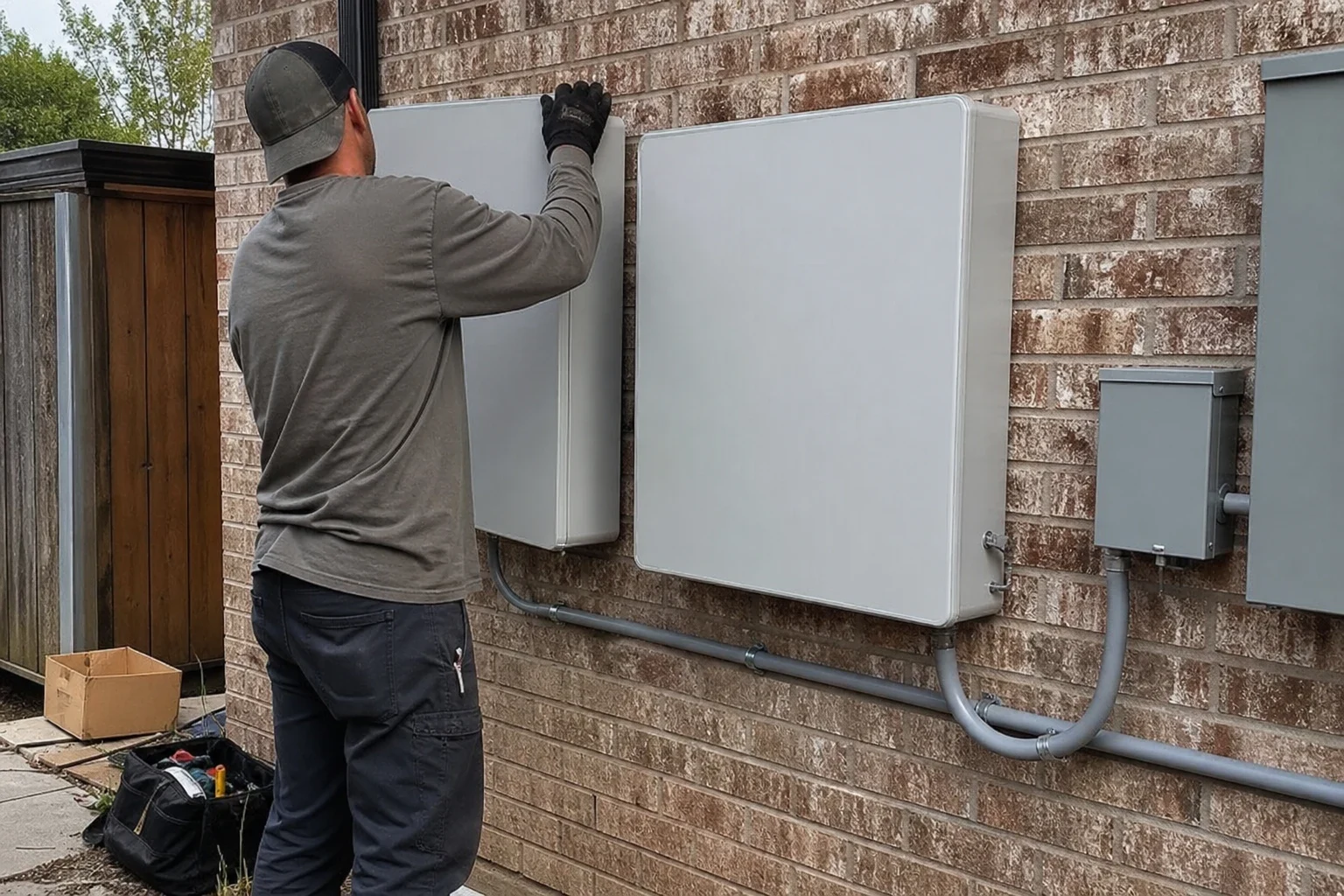
Battery Storage
Home batteries paired with solar, sized to the circuits you actually need during an outage and installed with a transfer switch that isolates your home from the grid.
Solar Repair
Diagnosis and repair for cracked panels, failed inverters, optimizers and microinverters, and wind-loosened wiring on your existing solar array.
Panel Cleaning
Pure-water cleaning that clears dust, pollen and storm debris from your array, with an inspection and before-and-after output numbers.
Roof-Mounted Solar
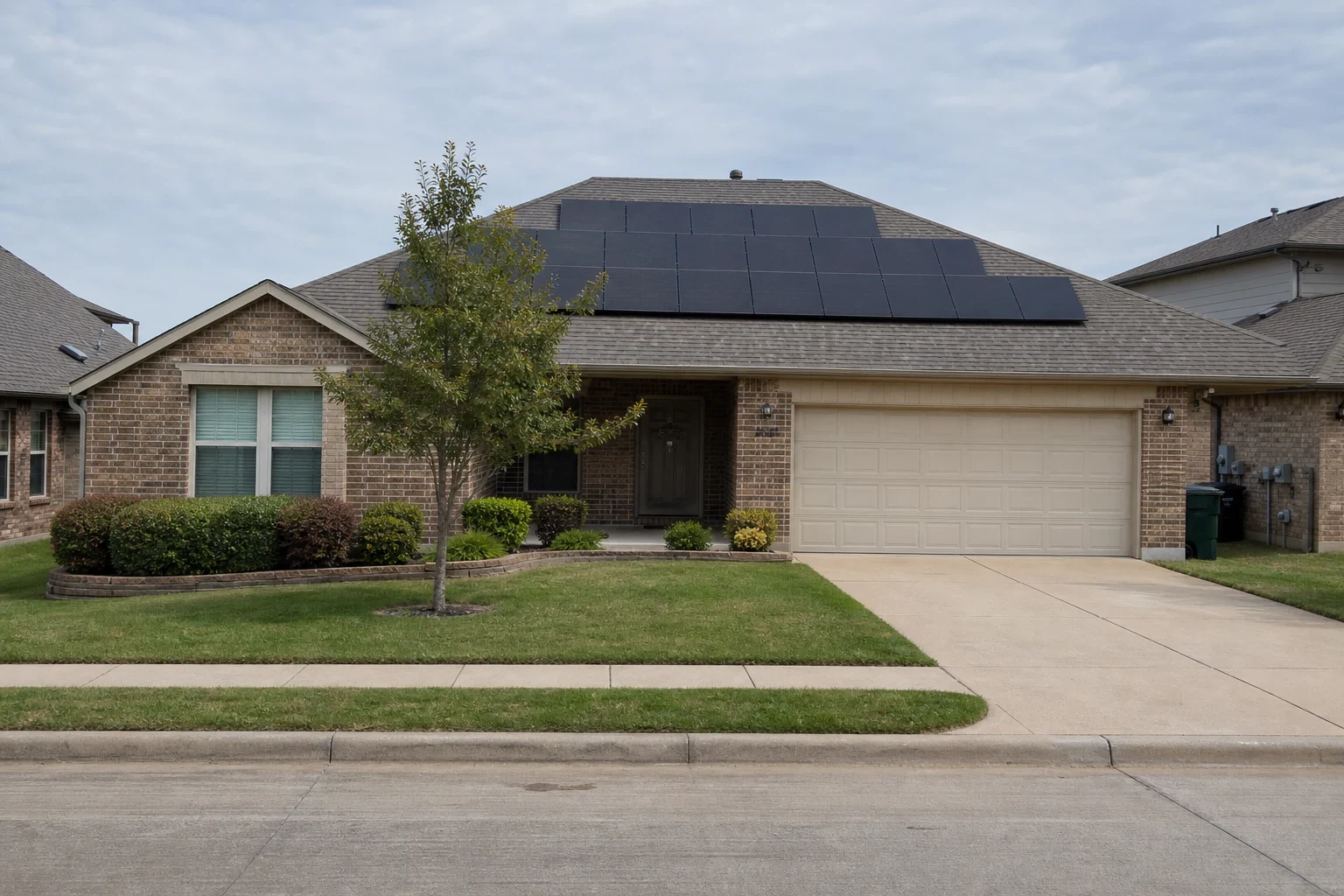
Panels on your existing roof, anchored into the rafters with flashed mounts and wired for code-required rapid shutdown, with a plan for hail season.
How We Work After a Storm and Every Other Day
Most calls we get after bad weather come from homeowners who aren't sure whether their system is damaged or just dirty. Our job is to give you a clear answer before anyone talks about money.
We inspect before we quote
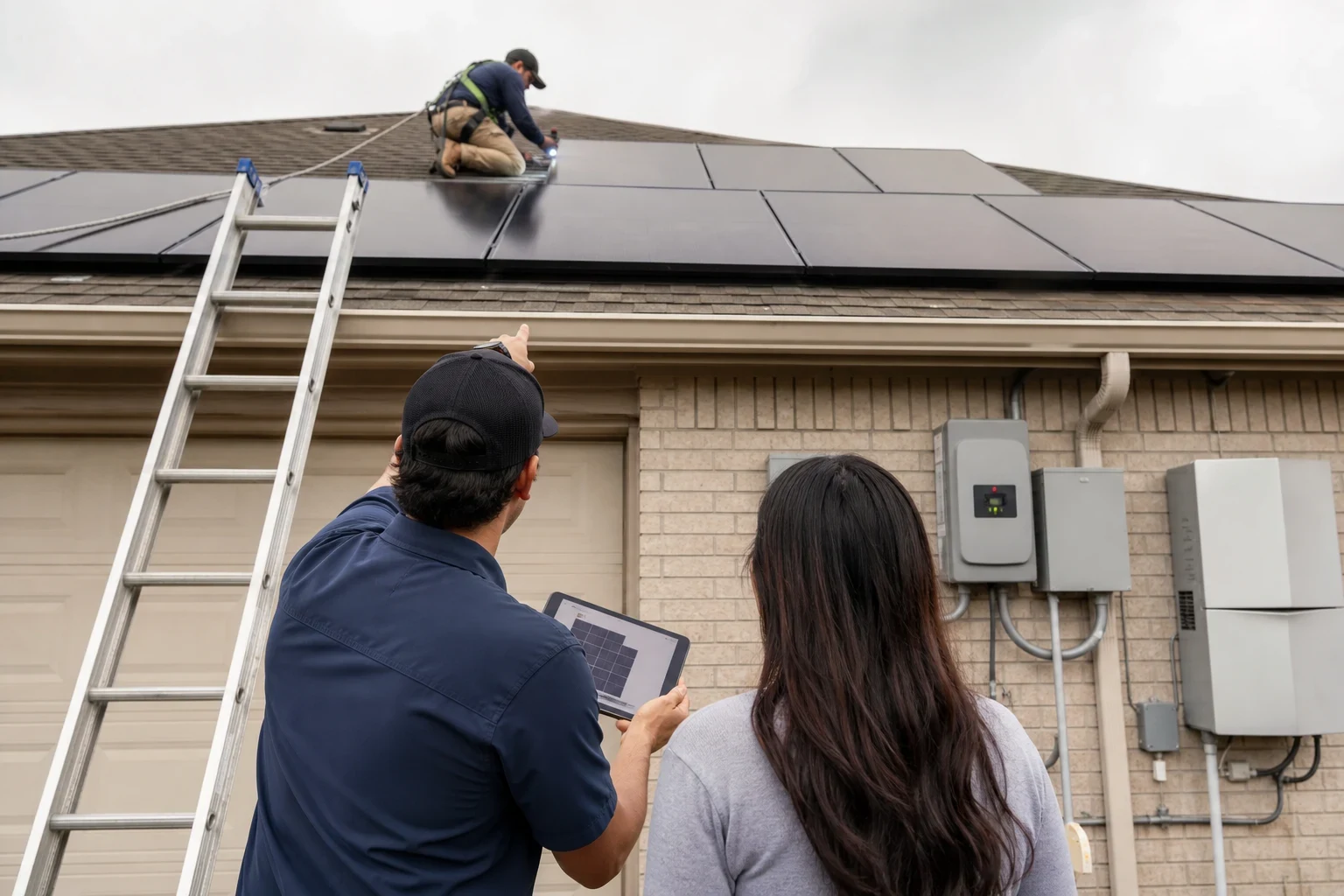
We check the glass, frames, racking, wiring and inverter before writing a number. A panel can look fine from the yard and still have microcracks in its cells that cut output for years. We test string voltages and compare them to what the panels should produce.
You see what we see
Every finding gets a photo: a shattered cell, a loose clamp, a corroded MC4 connector, a lifted flashing boot. You keep the photos. If you file an insurance claim, they give your adjuster something concrete to review.
Repair when repair makes sense
One hail-cracked module in a string usually means replacing that module, not the array. When the cracking is widespread or the panels are an older model that no longer matches, we explain the tradeoff and let you decide.
Insurance explained, not handled for you
We are not your adjuster and we won't pretend to be. We will walk you through what a solar claim usually involves, document the condition of your system and answer the adjuster's technical questions.
Clean, careful job sites
We protect walkways and landscaping, pick up every clipped zip tie and wire scrap, and leave the array labeled to code. Old or broken modules leave with us.
Where We Work
Our crews work out of Allen, TX, and travel to the neighboring cities as well: Plano, Fairview, Lucas, Parker, Frisco, McKinney, Richardson, Murphy, Wylie and The Colony. Every one of those cities has its own permit and inspection steps for solar. We take care of that paperwork for your home, whichever city it sits in.
- Allen
- Plano
- Fairview
- Lucas
- Parker
- Frisco
- McKinney
- Richardson
- Murphy
- Wylie
- The Colony
If your town isn't listed, give us a call and we'll tell you whether we can reach you.
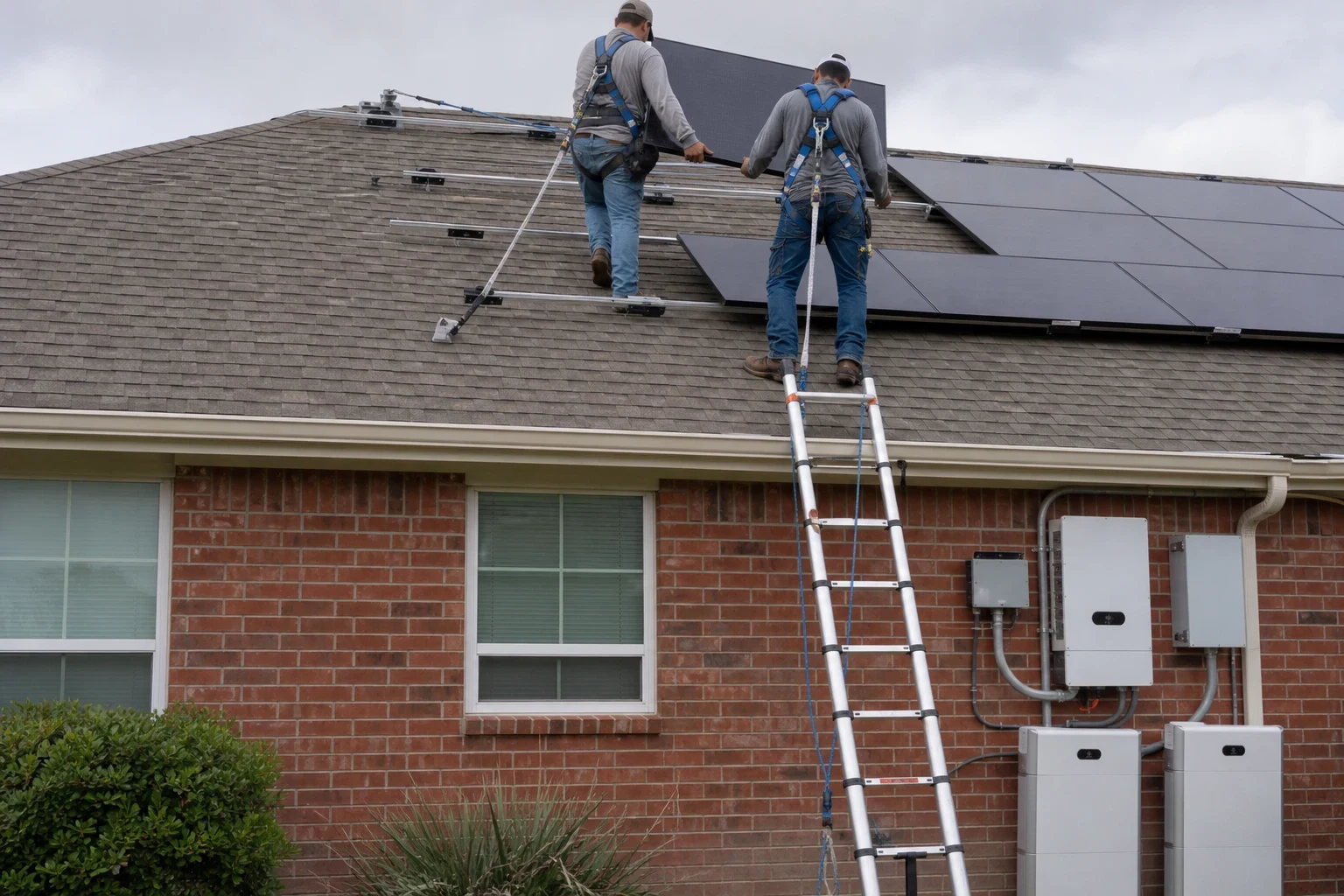
About Allen Solar Installation
We are a solar company that focuses on residential systems: putting them on homes, keeping them producing and fixing them when something breaks. Spring storms bring hail and high wind, and they often leave homeowners with an array they can't fully see from the ground and a production graph that suddenly dips.
We think the most useful thing a solar company can do is explain what is actually going on. That means naming the part that failed, showing you a photo of it and telling you whether it is worth fixing. Panels are built to take a lot, and not every storm damages them. When yours came through fine, we tell you that too.
What Moves the Price of Solar Work
No two systems cost the same, and we would rather explain why than hand you a number with no reasoning behind it. These are the factors that change an estimate most.
Every estimate is written out line by line after we have looked at your roof, your electrical panel and your existing equipment. If something changes once work starts, we show you and talk it through before going further.
- System size and usage
- We look at a full year of your utility history before sizing anything, because summer cooling loads and mild spring months can look very different. A bigger system calls for added panels and racking, and sometimes a higher-capacity inverter.
- Roof pitch and how we reach it
- A tall two-story roof or a steep slope calls for more fall protection and slower staging of materials. An array split across several small planes needs extra rails and more wire runs than one broad surface facing south or west.
- Equipment choices
- Microinverters, string inverters with optimizers and battery capacity all carry different costs. We explain what each one does on your roof, including how it handles partial shading.
- Condition of the existing system
- For repairs, the price depends on what failed. A loose connector is a short visit. Replacing hail-cracked modules depends on finding compatible panels, since older models are often discontinued.
- Electrical panel upgrades
- Some older main panels lack the capacity or breaker space for a solar backfeed or a battery. If yours needs work, it shows up as its own line on the estimate.
- Permits and utility approval
- New installations and many battery additions need a city permit, an inspection and utility interconnection approval. We pull the permit and schedule the inspection, and the fees appear on the estimate.
Questions Homeowners Ask Us
Can hail damage solar panels?
Yes, though most panels hold up better than people expect. Modules are typically covered by tempered glass tested against hail impacts, so moderate hail often leaves them untouched. Large hail can crack the glass or cause microcracks in the cells that are invisible from the ground but show up as lost production. We test string output and photograph the panels so you know which situation you're in.
Should I call my insurance company or a solar company first?
Many homeowners call us first so they know whether there is a real problem before opening a claim. We document what we find with photos and readings. If you file, that documentation gives your adjuster specifics. The coverage decision is between you and your insurer, and we don't act on their behalf.
My production dropped but nothing looks broken. What could it be?
Common causes include a tripped breaker or disconnect, a failed microinverter or optimizer, a loose or corroded connector, wiring chewed by squirrels, or simply heavy dust and pollen on the glass. Your monitoring app often points to the problem string or panel. We confirm it on site before recommending anything.
Do you work on systems another company installed?
Yes. We repair, clean and troubleshoot systems regardless of who put them in. If the original installer is out of business, we can still diagnose the fault, and when parts are discontinued we explain the compatible options.
Will a battery keep my power on during an outage?
A battery paired with the right equipment can power the circuits you choose when the grid goes down. Solar panels alone shut off during an outage for lineworker safety, so a battery is what keeps the lights on. We size the battery to the loads you care about most, like your refrigerator, lights and well pump if you have one.
How often do panels need cleaning?
Many systems only need cleaning once or twice a year, more if you're near construction or under trees that drop pollen and sap. Rain helps, but it rarely clears the film that bakes on during dry summers. We use soft brushes and purified water, not pressure washers or harsh chemicals that can harm panel coatings.
Does a solar repair need a permit?
It depends on the repair. Swapping a module or connector for a matching part usually doesn't, while replacing an inverter, adding a battery or rewiring part of the system often does. Requirements differ from city to city, so we check with the city where your home is and pull the permit whenever one is required.
How long does a new installation take?
The physical install usually takes a day or two for a typical home. Most of the calendar time goes to design, the city permit, the inspection and utility approval. We keep you updated at each stage so you know where things stand.
How a Job Runs From First Call to Final Check
The steps are the same for a new install or a storm repair, though a repair moves through them faster.
- 1
Phone call
Tell us what you're seeing: a drop in production, an inverter error, visible damage or interest in a new system. We ask a few questions and set a time to come out.
- 2
On-site inspection
We examine the array, test the strings, read the inverter logs and photograph everything. For new systems we measure the roof and check your electrical panel and meter.
- 3
Written estimate
You get a line-item estimate with photos attached and a plain explanation of what we recommend and why. If repair and replacement are both reasonable, we price both.
- 4
The work
We pull any required permit, schedule the work and protect your property while we're there. On install days, crews mount the racking, set the panels, run conduit and wire the inverter and disconnects.
- 5
Testing and handoff
We commission the system, confirm every string is producing and show you the monitoring app. For permitted work, we meet the inspector and handle utility paperwork until you have permission to operate.
Find Out What Your System Actually Needs
After a storm, or any time your production looks off, we'll inspect the array, photograph what we find and explain your options in writing. Planning a new system instead? We'll start with your bills and your roof.