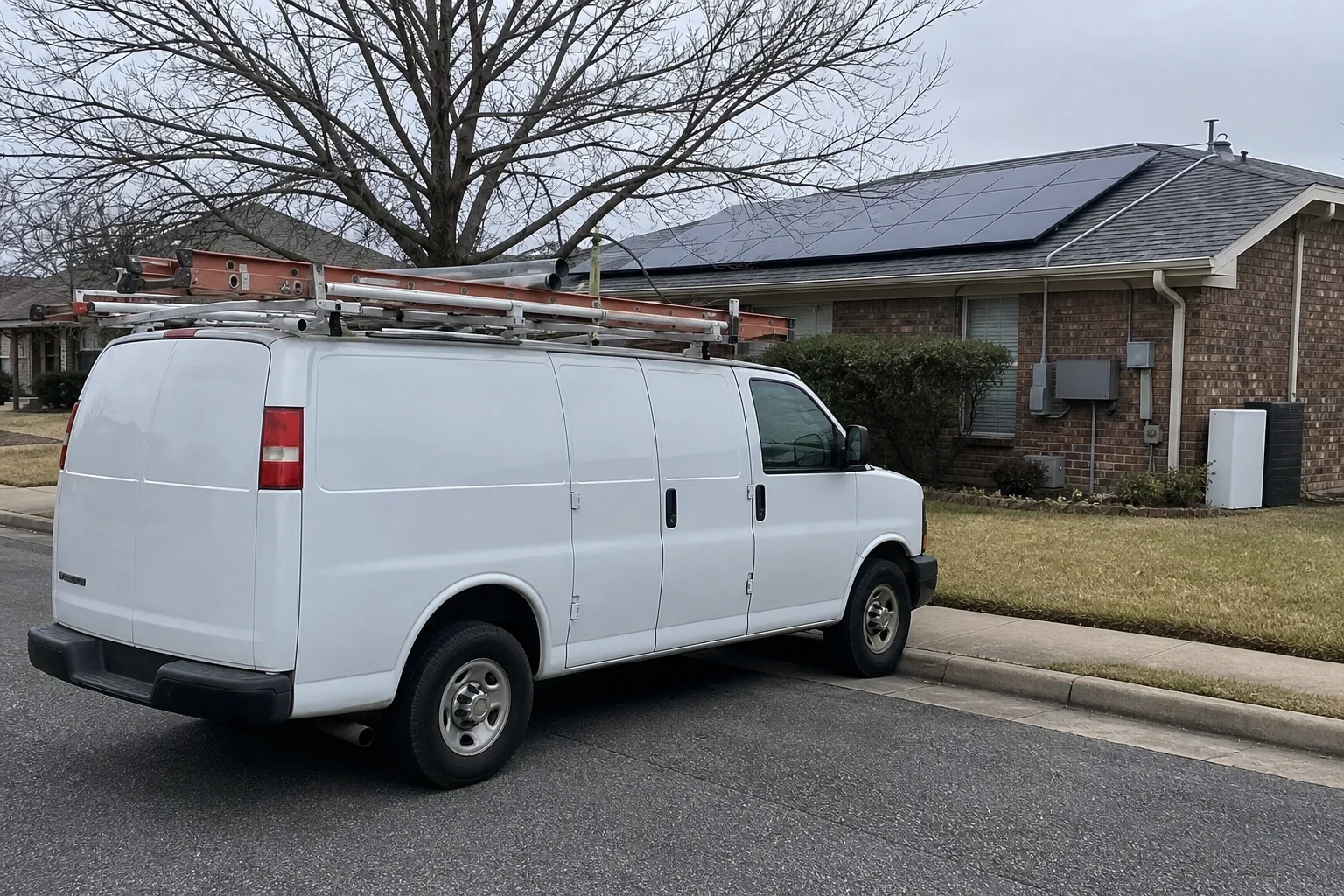
Solar Service in Allen and Nearby Collin County Towns
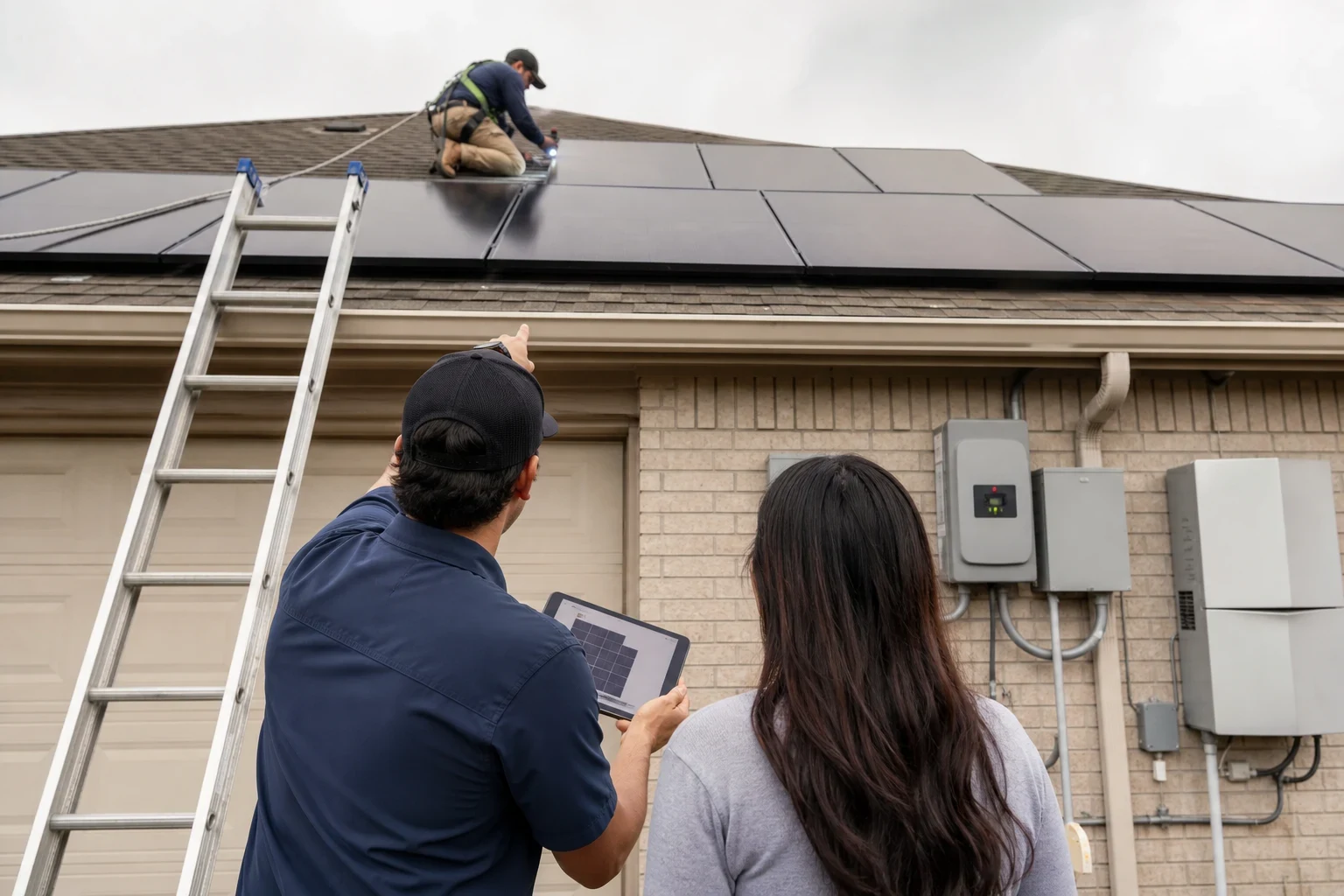
We install, repair and clean solar systems in Allen and the towns around it. After hail or high wind, we check the panels, racking and wiring on your home. We photograph what we find and explain what needs fixing before any work moves forward.
Towns We Cover
Our crews work across Allen and the neighboring cities of Plano, McKinney, Frisco, Richardson and The Colony. Every town gets the same services: solar panel installation, roof-mounted solar, battery storage, solar repair and panel cleaning. What changes from one city to the next is mostly paperwork, because each city runs its own building and electrical permit review.
We also serve Fairview, Lucas, Parker, Murphy and Wylie. Lots there are often larger, and some homes have long runs between the array, the inverter and the main service panel. Longer conductor runs change the wire size and the conduit routing, so we measure those distances on site before we write your estimate. After a storm, we ask what you are seeing, such as cracked glass, a dangling conduit or an inverter fault code, so we arrive with the right parts.
Towns we cover from Allen
- Allen
- Plano
- Fairview
- Lucas
- Parker
- Frisco
- McKinney
- Richardson
- Murphy
- Wylie
- The Colony
Not on the list? Call (972) 893-1119 and ask.
What Shapes Solar Work Across the Metro
- Hail and wind
- North Texas springs bring hail and straight-line wind. The tempered glass on most modern panels handles ordinary hail. Large stones can crack it, though, or leave microcracks in the cells that only show up weeks later as lower output. Wind strains racking clamps and the flashing at each roof attachment. After a storm we inspect the glass, frames, rails, attachments and conduit, and we compare production data against the weeks before the storm to catch hidden cell damage.
- Summer heat and dust
- Panel output drops as cell temperature climbs, and dark shingle roofs get very hot in July and August. Heat also ages MC4 connectors and inverter electronics faster. Pollen and construction dust bake onto the glass during dry spells, and a light rain rarely rinses that film off. That buildup is what panel cleaning removes.
- Housing age and roof types
- Most homes here were built from the 1980s on, with wood framing and composition shingles on hip and gable roofs. Hip roofs split an array into smaller planes, which affects panel count and string layout. Before we install roof-mounted solar, we check the age of the shingles and the decking, since pulling panels later for a reroof adds cost. If the roof needs replacing first, we plan timing around your roofer.
- HOA and permits
- Texas law limits how far a homeowners association can go in banning solar, but many HOAs still review where panels go and how they look. We prepare a layout drawing for that review. Each city requires building and electrical permits plus an inspection. The utility must also approve interconnection before the system turns on. We file the permits and schedule the inspection.
- Storm insurance claims
- If storm damage leads to a claim, we give you dated photos and a written list of the damaged components, along with what repair or replacement involves. The adjuster decides coverage. Our part is an accurate account of the equipment.
Talk Through Storm Damage or a New System
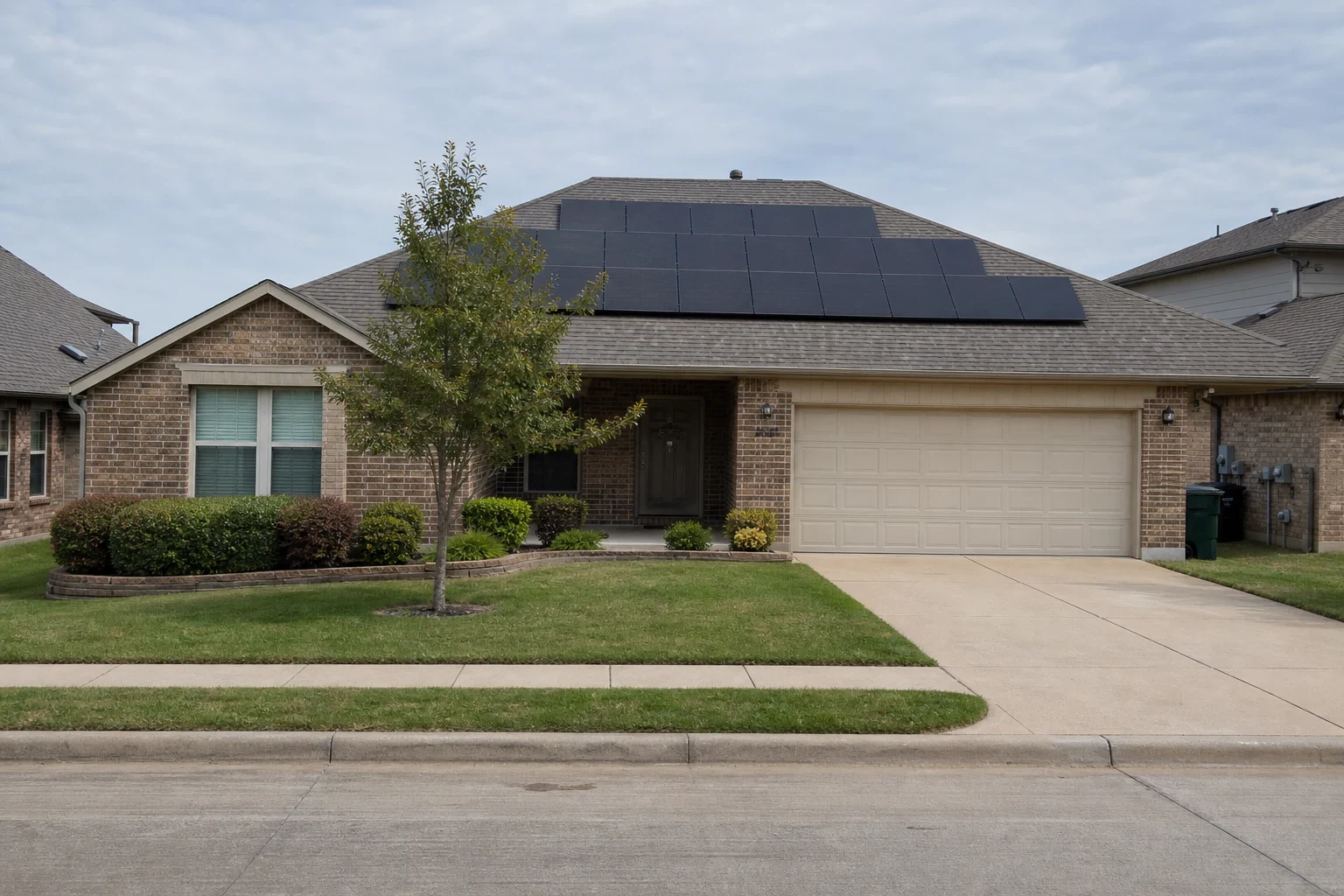
Tell us your town and what you are seeing on your array, or what you want a new system to do. We will explain the next steps and set a time to look at your home.