ServicesBattery Storage
Battery Storage in Allen
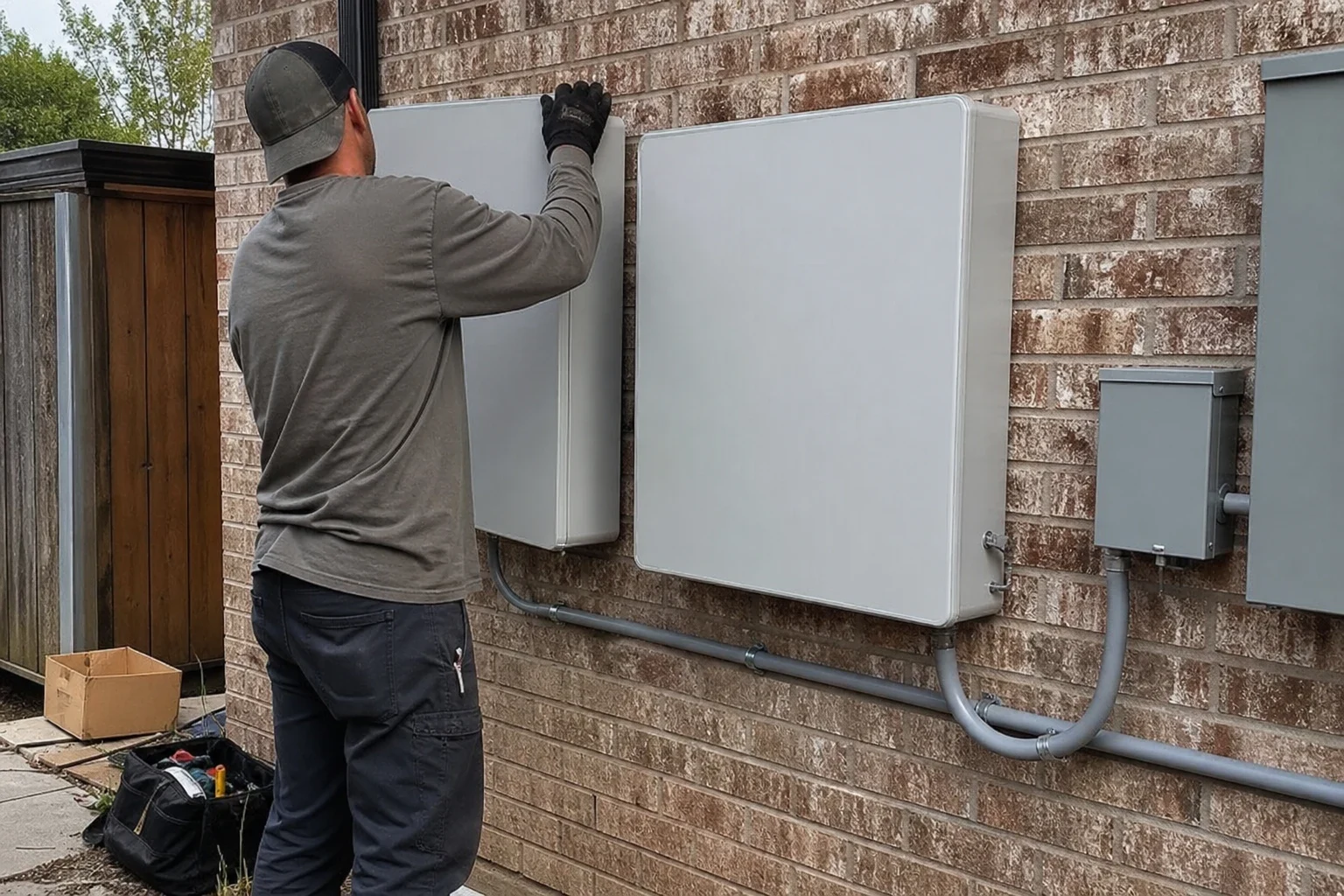
When a storm knocks out power, a home battery keeps your refrigerator, lights, internet and medical devices running. We size the battery to your real loads, wire it through a proper transfer device and pair it with your solar so it recharges while the grid is down.
How Stored Power Works and Who It Suits
Home storage holds energy from your solar array or the utility in a bank of lithium cells, then hands it back through an inverter whenever you call on it. When the grid fails, a backup gateway or automatic transfer switch cuts your home off from the utility in a fraction of a second. Your circuits stay live, and nothing backfeeds onto lines that repair crews may be working on.
Batteries make the most sense for homes with solar already on the roof, households with someone who depends on powered medical equipment, and anyone tired of losing a freezer full of food after a spring thunderstorm or a hard freeze. If your main goal is simply lowering the bill, we will tell you plainly whether the numbers work, because sometimes they do not.
What Our Battery Storage Work Includes
Load review before sizing
We go through your breaker panel and ask which circuits matter in an outage. Capacity is measured in kilowatt-hours, but output in kilowatts matters just as much, since motors like a well-used garage freezer or a pool pump draw a surge at startup that a small inverter cannot handle.
Lithium iron phosphate batteries
We favor LFP chemistry for homes. It tolerates heat better than older lithium chemistries, holds up to many more charge cycles and is far less prone to thermal runaway.
Critical loads panel or whole-home backup
Partial backup moves your essential circuits to a dedicated subpanel the battery can carry for longer. Whole-home backup uses a gateway at the main service and needs more capacity, and we explain the tradeoff before you choose.
AC or DC coupling to your solar
On a new system, one hybrid unit can do the inverter's job and route DC power from the array into the cells with no extra conversion step. If you already have solar with a string inverter or microinverters, an AC-coupled battery adds storage without replacing equipment that still works.
Permits, inspection and utility paperwork
Obtaining the electrical permit is our job. We book the inspector's visit with the city and handle the interconnection change your utility requires once storage is added. Copies of every approved document go to you for your records.
Signs a Battery Belongs on Your List
- Outages keep costing you
- Spoiled food, a reset sump or a home office that goes dark adds up. A battery covers the gap between the storm passing and the lines coming back.
- Your solar shuts off when the grid does
- Grid-tied inverters are required to stop producing during an outage for line worker safety. Without storage and a transfer device, your panels sit idle exactly when you want them.
- Someone relies on powered equipment
- Oxygen concentrators, CPAP machines and refrigerated medication cannot wait for restoration. A critical loads panel puts those circuits first.
- You are exporting most of your solar
- If your plan credits exported energy at a low rate, storing midday production and using it in the evening can be worth more than sending it back to the grid.
How a Battery Installation Runs
- 1
Phone call and site look
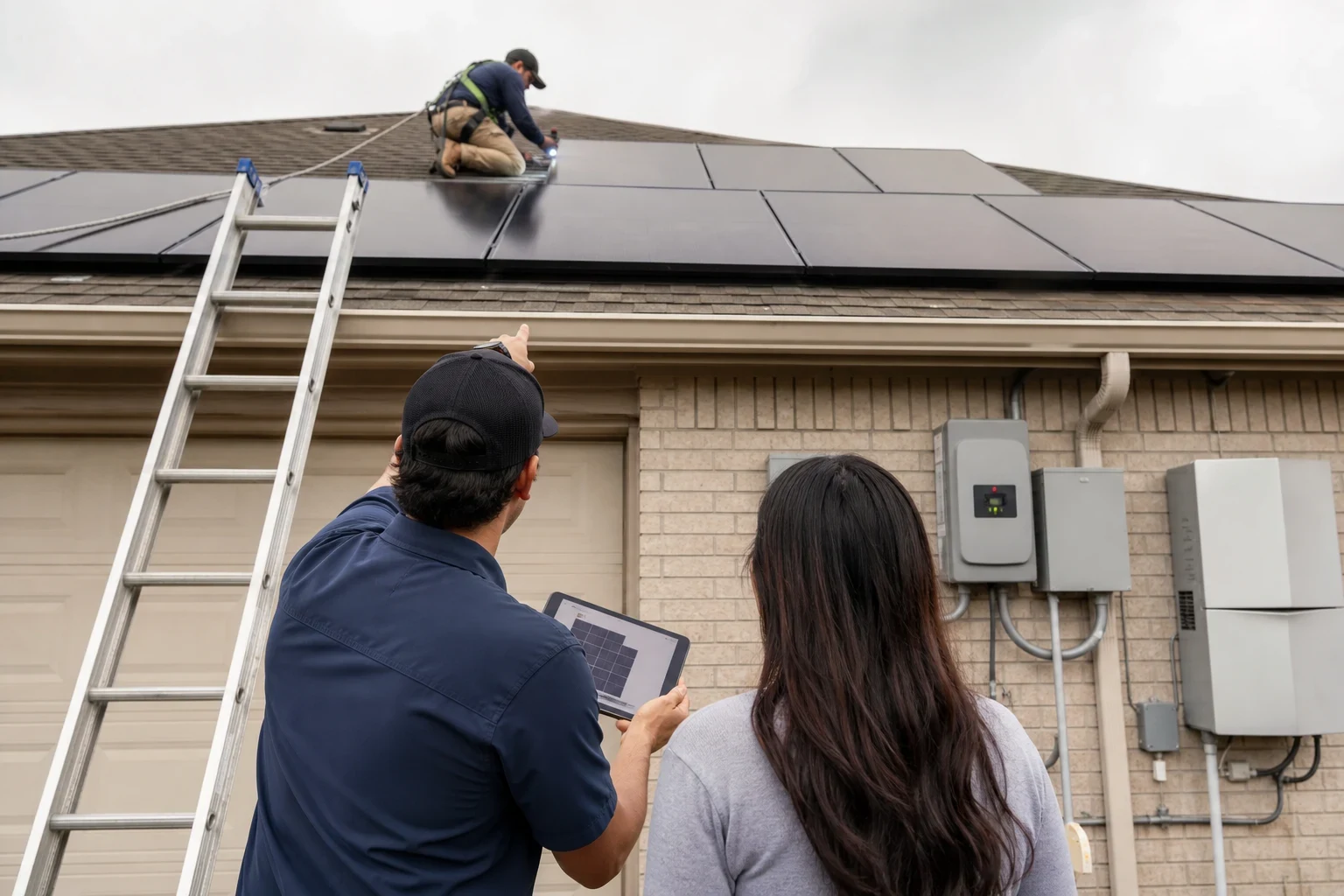
We start with a call about your goals and outage history, then visit to check your main panel, service size, existing solar and where the battery can mount.
- 2
Placement and design
Batteries mount on an exterior wall or inside the garage, with the clearances code requires from doors, windows and gas meters. North Texas summers are hard on cells, so we look for a shaded or north-facing spot. Sustained heat ages lithium cells faster and makes the system throttle its output to protect itself.
- 3
Installation day
Most installs take one day. We mount the battery and gateway, run conduit, move critical circuits if needed and shut your power off only for the final tie-in, usually a few hours.
- 4
Inspection and commissioning
After the inspector signs off, we configure backup reserve levels, test a simulated outage with you watching and show you the monitoring app.
What Moves the Cost of Battery Storage
Every quote we give is a written line-item estimate, so you can see what the battery, the electrical work and the permits each add. The biggest swings come from how much of your home you want backed up and what your existing equipment needs.
- Capacity and number of units
- More kilowatt-hours means longer runtime. Whole-home backup often requires two or more batteries stacked together.
- Electrical panel condition
- An older or full main panel may need a critical loads subpanel, a service upgrade or breaker rework before a gateway can go in.
- Existing solar equipment
- Adding storage to an older system can mean AC coupling or swapping a string inverter for a hybrid unit.
- Wall location and conduit runs
- A battery mounted far from the main panel needs longer conduit and heavier wire, which adds material and labor.
Battery Storage Questions
- How many hours of backup will I actually get?
- Runtime comes down to the load you put on the battery. One unit carrying a refrigerator, lighting, Wi-Fi and a handful of outlets will typically last overnight and well into the following day. Once the sun is up, your panels refill it, so essential circuits can keep going for several days. During the site visit we work out an estimate from the circuits you plan to back up.
- My panels went up years ago. Can storage still be added?
- In most cases it can. An AC-coupled battery sits beside the inverter you already own and works with most models on the market. We look up your inverter and inspect your main panel first, then tell you whether any part needs to change.
- Will a battery run my central air?
- Some setups can, but the compressor's startup surge needs a battery and inverter with enough continuous and peak output. Many homeowners choose to leave central air off the backup circuits so the battery lasts much longer.
- Is it safe to have a battery attached to the house?
- LFP batteries are among the most stable chemistries available, and every install follows the electrical code for clearances, disconnects and labeling. The city inspector reviews the work before the system is turned on.
- How do I know you will do the job right?
- Allen Solar Installation is BBB Accredited with an A+ rating. On every job we photograph the finished wiring, walk you through the system and leave the permit and inspection paperwork with you.
Ready for the Next Outage
Tell us which circuits you cannot go without and we will work out a battery size and layout that fits your home. We serve Allen, Plano, McKinney, Frisco and nearby towns.