ServicesRoof-Mounted Solar
Roof-Mounted Solar in Allen
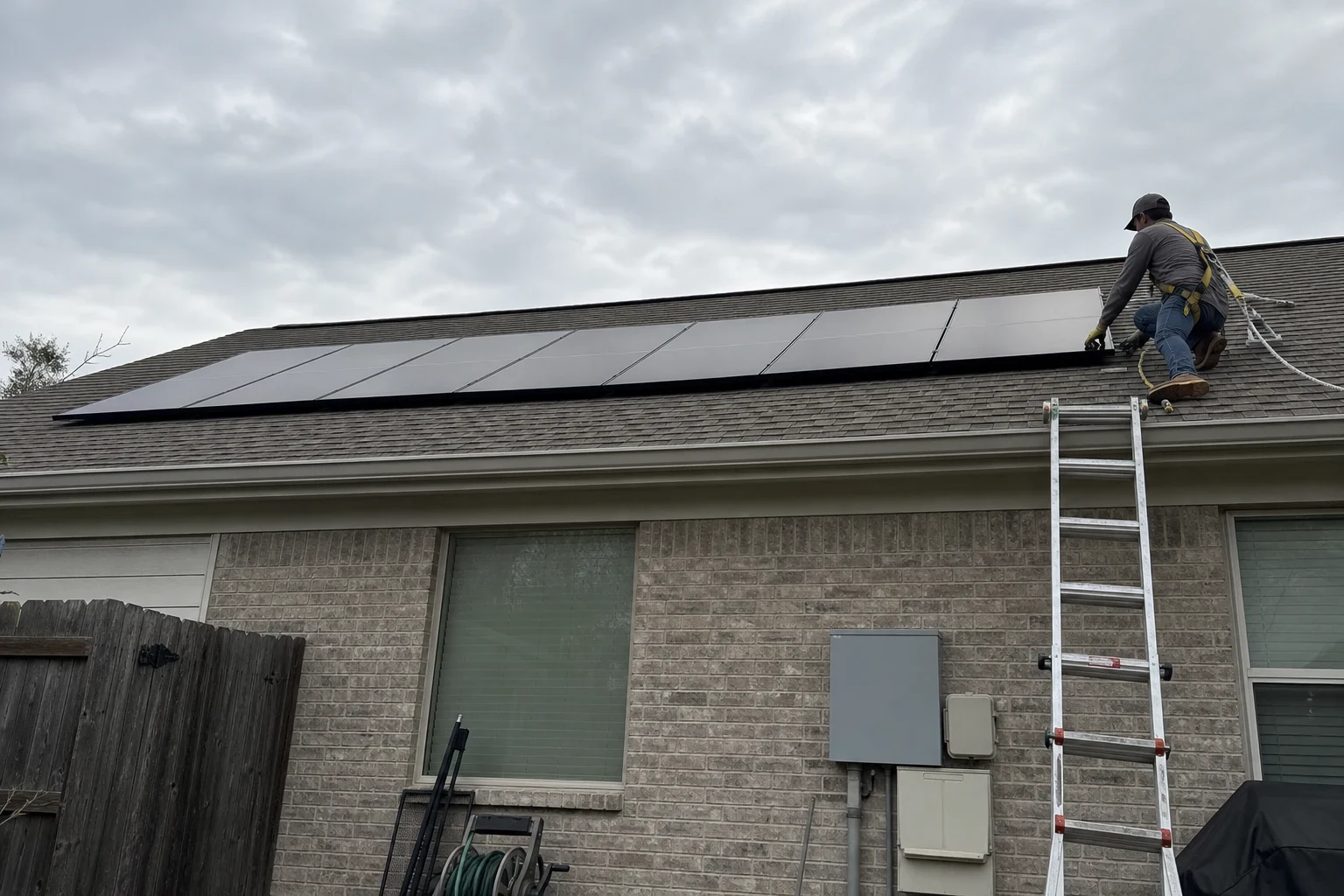
We put solar on the roof you already have, with every mount lagged into a rafter and flashed under the shingles. Before we draw a layout, we check the roof's age and condition so a storm or a future reroof doesn't leave you paying twice.
When the Roof Is the Right Place for Panels
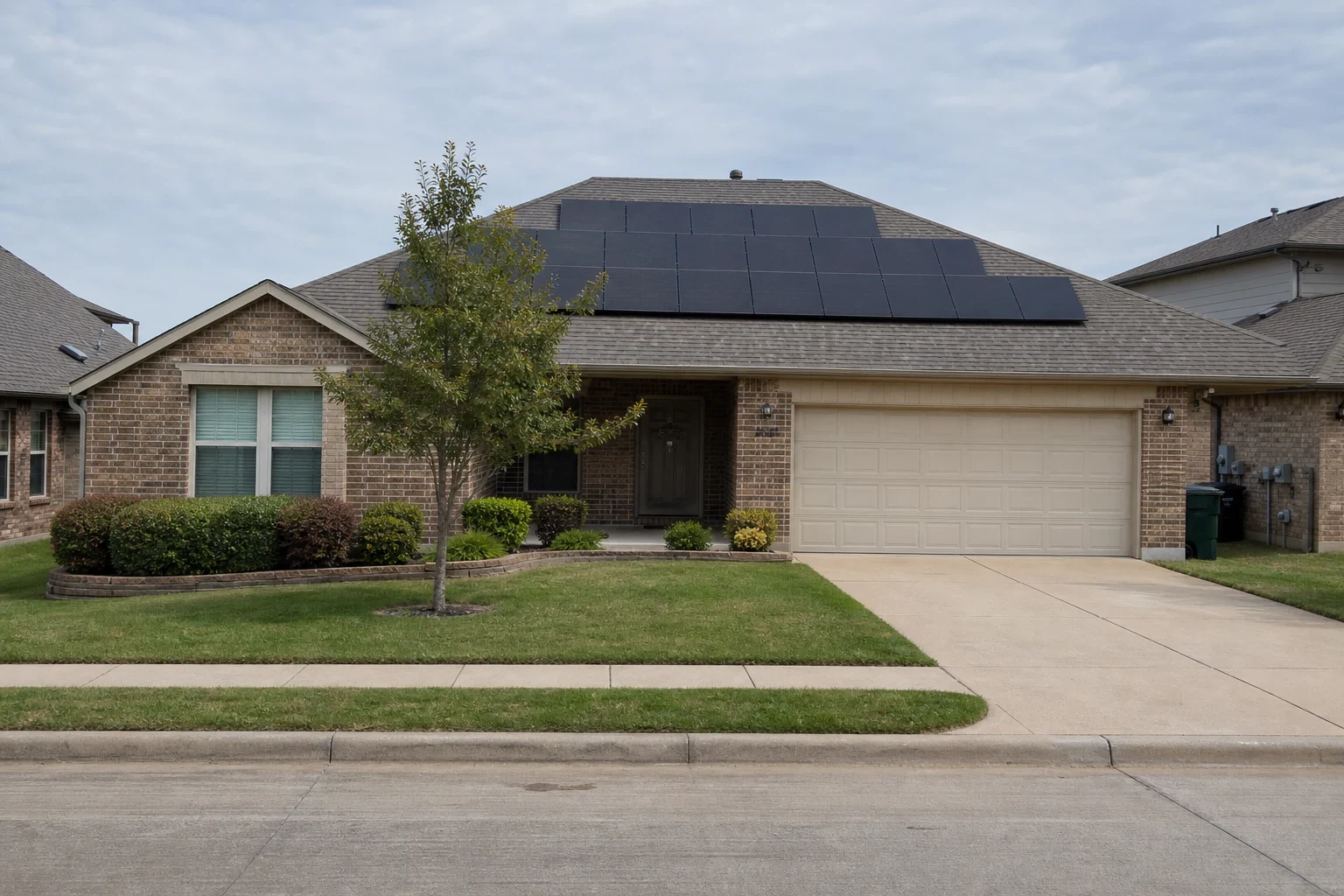
A roof-mounted array is the most common way to put solar on your home. Rails carry the panels a few inches above the shingles, and those rails sit on mounts bolted into the framing. Done right, the roof stays watertight and the array handles the wind and hail North Texas throws at it every spring.
It is the right call when the roof has enough clear, south- or west-facing area and the shingles have years of life left. If your roof is near the end of its life, we tell you so and suggest replacing it before we install. Panels have to come off for a reroof, and doing that a few years after install adds cost you can avoid.
Allen Solar Installation is BBB Accredited with an A+ rating. On the phone and at the roof check, we lay out what we found, the proposed layout and the line items before any work is scheduled.
What a Roof-Mounted Install Includes
- 01
Rafter-located, flashed mounts
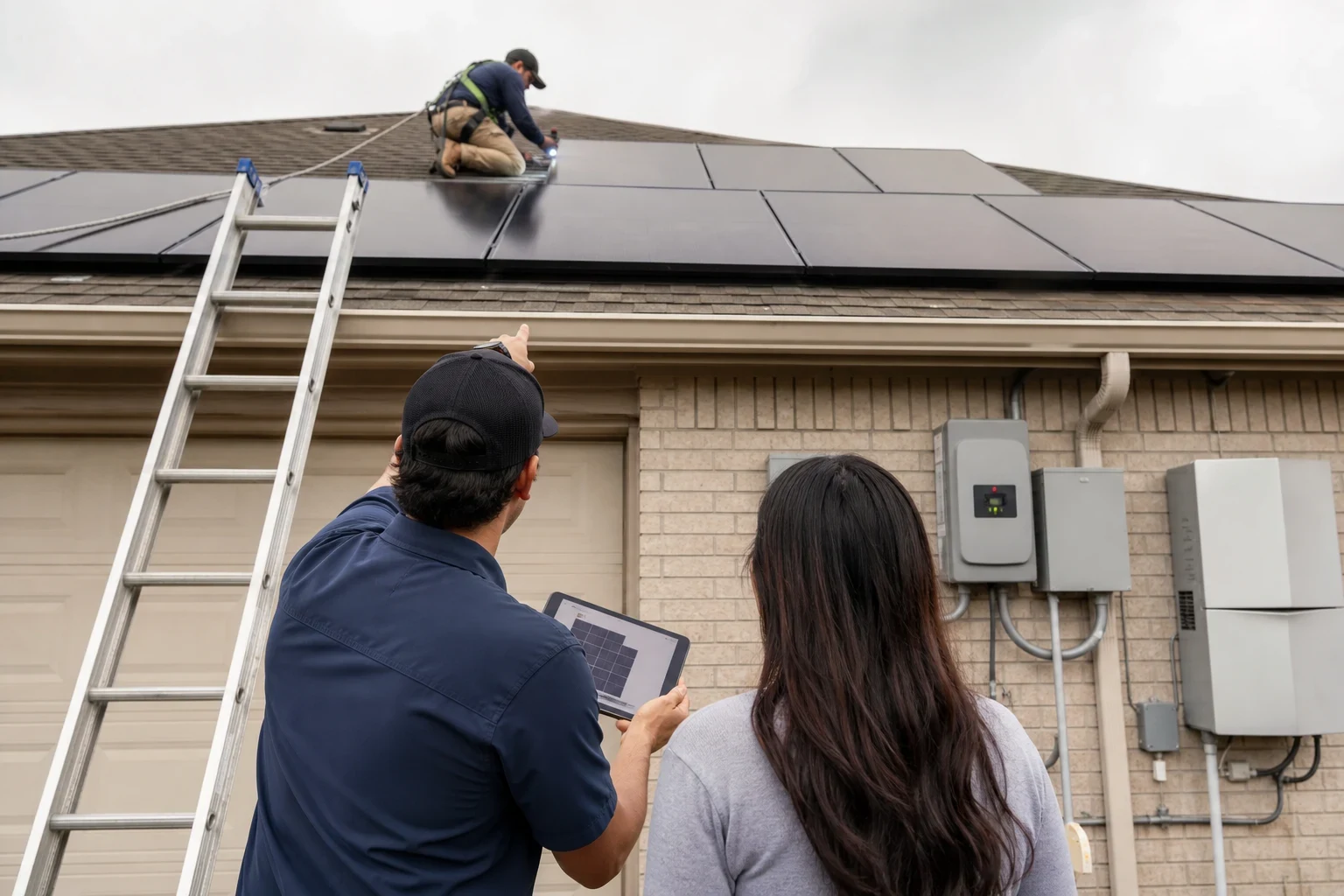
We find each rafter instead of guessing, then drive stainless lag bolts into solid wood. Every mount gets a metal flashing slipped under the shingle course above it, plus sealant at the penetration, so water sheds around the hole rather than into it.
- 02
Racking sized for wind
Rail spans and mount spacing are set from the wind load for your roof's pitch and the array's position. Edges and corners see the strongest uplift, so mounts are closer together there.
- 03
Hail-tested modules
We specify panels with tempered glass that have passed standard hail impact testing. No panel is hailproof, but good glass and a stiff frame survive the common pea-to-quarter size storms far better.
- 04
Fire-code pathways and setbacks
Clear walkways are left along the ridge and edges so firefighters can reach the roof. That shapes how many panels fit, and we show you the layout before you decide.
- 05
Wiring, rapid shutdown and paperwork
Conductors run in conduit down to the inverter, and rapid shutdown devices drop the roof wiring to a safe voltage whenever the system is switched off. The permit application, the city's inspection visit and the utility's interconnection approval are all handled on our side, so you are not chasing forms.
Questions about Roof-Mounted Solar?
Call(972) 893-1119Signs Roof-Mounted Solar Makes Sense for Your Home
Summer bills keep climbing
Air conditioning drives the biggest usage months, and those are also the months a south- or west-facing array produces the most.
Open roof faces with little shade
A clear plane without vents, skylights or tall trees shading it most of the day is the simplest place for an array.
A fairly new roof
If your shingles were replaced recently, possibly after a hail claim, this is the best time to add solar. The array can stay in place for the life of that roof.
Neighbors' arrays came through the last storm
Seeing panels on nearby roofs survive a hailstorm is a fair reason to look at your own. We can explain what made the difference, from glass rating to mount spacing.
How the Job Runs
- 1
Roof and electrical check
We look at shingle condition, decking soundness from the attic, rafter size and spacing, and your main service panel. These decide whether the roof can carry the array and whether the panel can accept the new breaker.
- 2
Layout, permit and quote
You get a drawing showing panel placement and setbacks, with a line-item quote we walk through with you by phone. Once you give the go-ahead, we apply to the city for the permit.
- 3
Install day
The crew sets the mounts and flashing first, then rails, then panels, then wiring. We keep debris off your landscaping and pick up bolts, wire clippings and packaging before leaving.
- 4
Inspection and turn-on
The city inspector checks the work, then the utility approves interconnection. We switch the system on only after both sign off, and we show you how to read its monitoring.
What Moves the Price
Two homes with the same size system can price differently because of what is on and under the roof. We price from what we actually find, and the quote breaks each part out so nothing appears later.
- System size
- More panels means more modules, rails and mounts, and possibly a larger inverter.
- Roof pitch and layout
- Steep roofs need extra fall protection and slow the crew down. Several small roof faces need more racking and wiring than one large plane.
- Electrical panel capacity
- Older or full main panels sometimes need an upgrade before the system can connect.
- Equipment choice
- Microinverters, string inverters with optimizers, and higher-efficiency panels each cost differently and suit different roofs and shade patterns.
Roof-Mounted Solar Questions
Do the roof penetrations cause leaks?
A properly flashed mount sheds water the same way the shingles around it do. Every lag bolt is driven into a rafter, and a metal flashing slides under the course above so rain flows over the penetration instead of into it. When a solar roof does leak, the cause is usually a mount that missed the framing or relied on caulk alone, which is why each of ours gets flashing.
What happens to the panels if hail damages my roof?
If the roof needs replacing, the array has to come off first and go back on after. We handle the removal and reinstall of the solar while the roof work is done separately. We can explain what to ask your insurance adjuster about solar detach-and-reset, though the adjuster makes the coverage decision.
Can hail break the panels?
Large hail can crack panel glass, but the modules we use have passed standard impact testing and hold up well against the common storms. After a bad storm, we can inspect the array and check production through the monitoring. Our Solar Repair page covers what we do when a panel is damaged.
Should I replace my roof before going solar?
If the shingles are worn, curling or near the end of their life, yes. We will tell you plainly what we see during the roof check so you can have it replaced before we schedule the install.
Can I add batteries later?
Yes. We can plan the inverter and panel space so Battery Storage can be added without rewiring the array.
Find Out What Your Roof Can Carry
Tell us your roof's age, which way it faces and what your summer bills look like. We will talk through whether roof-mounted solar fits and what the next step is.