ServicesSolar Panel Installation
Solar Panel Installation in Allen
We design and install rooftop solar that is built to ride out hail and spring wind. That means modules with tested impact ratings, mounts lagged into rafters and wiring that is protected from the weather. You get a system that keeps producing after the storm passes.
What a new solar system involves
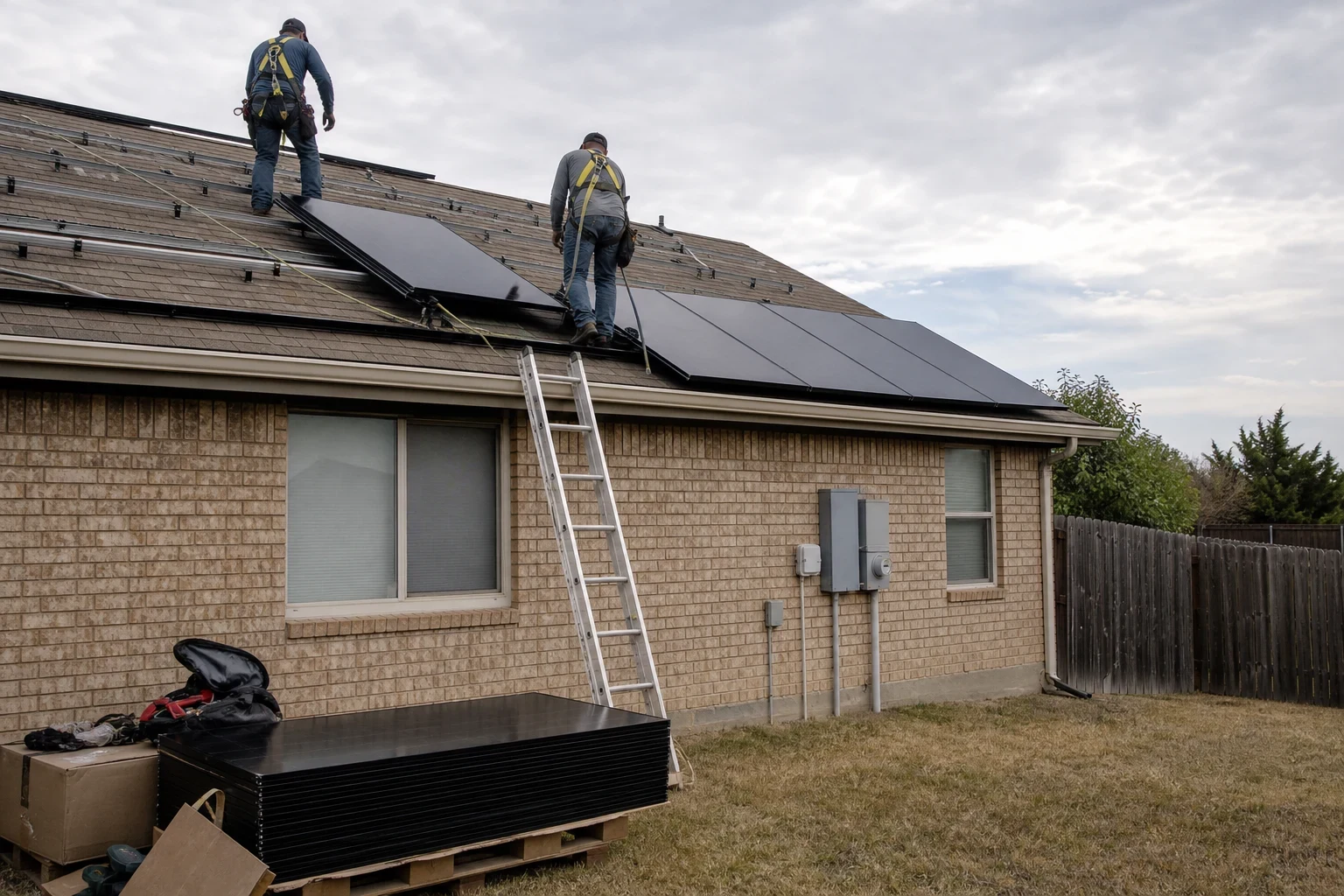
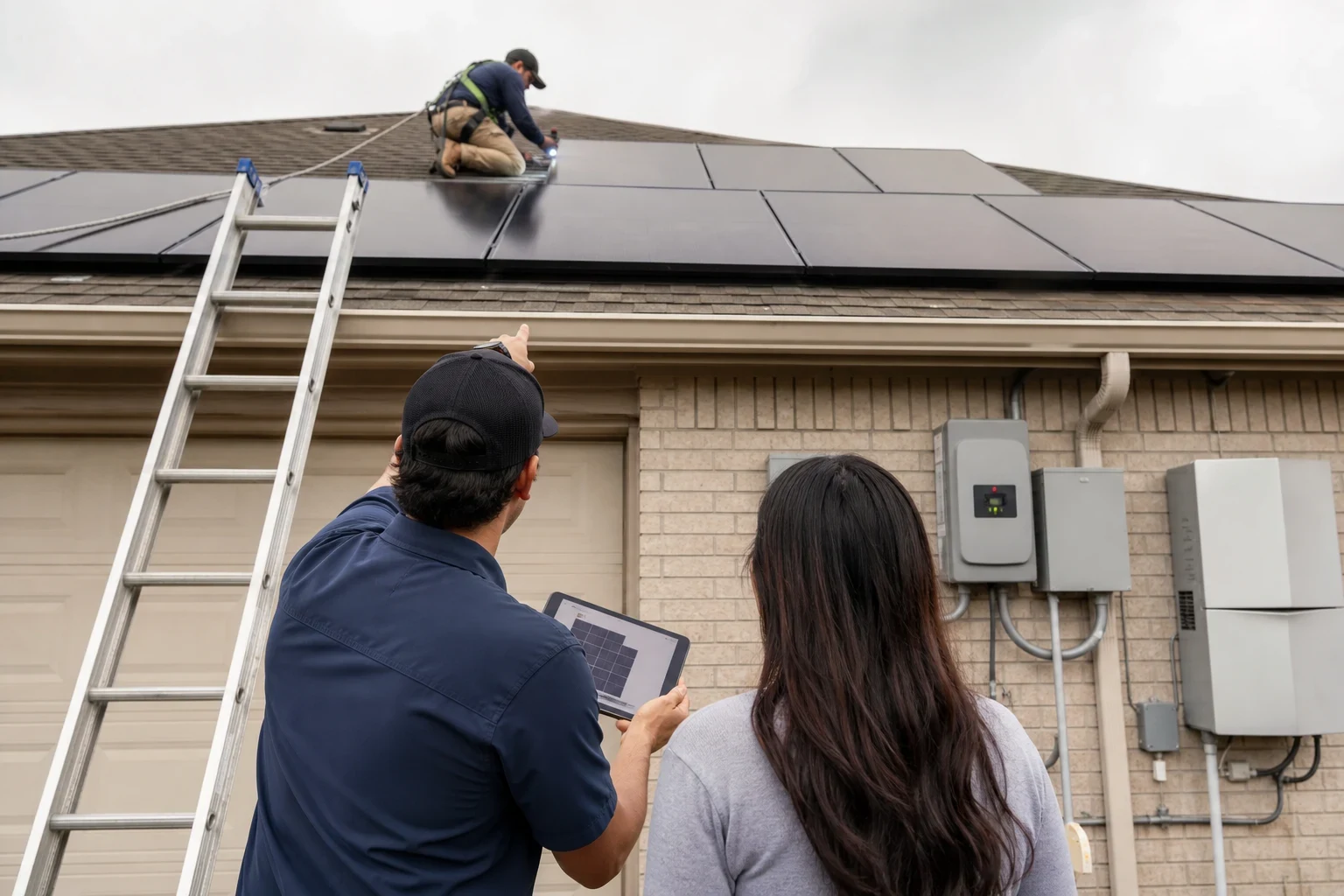
A residential system is more than panels. It is a set of modules, an aluminum racking system attached to your roof framing, an inverter or microinverters that convert DC power to AC, rapid shutdown equipment required by the electrical code, and a production meter and disconnect tied into your main service panel. Each part has to be sized and placed correctly, or the weakest one sets the limit for the whole system.
Our approach starts from what happens after a hailstorm or a strong straight-line wind, because those are the days that test a system in Allen and across Collin County. We specify panels with tempered glass and tested impact ratings, space attachments so wind uplift is spread across more rafters, and route conduit where debris and runoff will not chew at it. If damage ever does happen, the layout drawings and serial records we keep make the repair and any insurance claim faster to document.
What our installation includes
Roof and structural check
We look at rafter size and spacing, decking condition and the age of the shingles before we design anything. If the shingles have only a few seasons left, we say so up front. Pulling panels off for a reroof and setting them back costs more than installing after the new roof goes on.
Shade and production modeling
We map trees, chimneys and vent stacks against the sun path for each roof face. South and west faces usually carry the system, and the model shows what each panel is expected to produce.
Flashed, rafter-anchored mounts
Every attachment is lagged into a rafter and sealed with flashing that sheds water under the shingle course. Sealant alone is not the waterproofing, it is the backup.
Inverter and electrical work
We install string inverters or microinverters, rapid shutdown devices, the AC disconnect and the breaker or line-side connection at your panel. Wire runs are clipped to the rails so they do not sag onto the roof surface.
Permits and utility paperwork
We draw up the plan set, apply to the city for the building permit and submit the request to connect to your electric provider's grid. You sign where your signature is required, and we keep after the file until permission to operate comes through.
Monitoring setup
Before we leave, we connect the system to its monitoring app and show you how to read panel-level or string-level output, so a drop in production is easy to spot.
Signs solar makes sense for your home now
- Summer bills that keep climbing
- If July and August usage dwarfs the rest of the year, a properly sized system offsets the most expensive months, when air conditioning runs hardest and sun hours are longest.
- A newer roof after hail
- A roof replaced in the last few years after storm damage has decades of life left. That is the best time to add panels, since they will not need to come off for a reroof for many years.
- Open south or west roof faces
- Unshaded roof planes facing south or west give the strongest production. East faces can work, and we will show you the numbers before you decide.
- Plans for backup power
- If outages after storms are a concern, designing the array with battery storage in mind from the start avoids rewiring later.
How the job runs, from first call to power on
- 1
Measuring roof and service
We take dimensions of each roof plane, look at the rafters from inside the attic, photograph your main breaker panel and go over twelve months of electric bills. Those numbers set the size of the system.
- 2
Design and plan set
We lay out the array, select modules and inverters, and draw the single-line electrical diagram. You see the layout and expected production before anything is ordered.
- 3
Permit and interconnection
We file the permit and the utility application on your behalf. Most homeowners associations can review placement, but Texas law limits their ability to prohibit solar outright, and we prepare the drawings they ask for.
- 4
Installation day
On a typical house, the roof work wraps up in a day or two. The crew sets mounts, rails and modules, runs conduit down to the inverter and disconnect, and picks up wire clippings and packaging before leaving.
- 5
Inspection and permission to operate
The city inspector checks the work, the utility sets or reprograms the meter, and once permission to operate is granted we turn the system on with you.
What moves the price of an installation
Two homes with the same square footage can end up with very different quotes. The price depends on how much power you need, what your roof allows and what your electrical service can accept. We walk through each line on the phone and in writing so you can see where the money goes.
- System size
- The number of panels follows your annual usage and how much of it you want to offset.
- Equipment choice
- Microinverters, string inverters with optimizers and higher-efficiency modules each carry different costs and different performance on shaded or split roofs.
- Roof layout and pitch
- Steep pitches, many small roof faces and tile or slate surfaces take more labor and more mounting hardware.
- Electrical panel capacity
- An older or full main panel may need a line-side tap or a panel upgrade to accept solar backfeed safely.
- Adding storage
- Pairing the system with a battery adds equipment and wiring, but costs less when planned together than retrofitted later.
Solar installation questions
- Will hail damage my panels?
- Modern modules use tempered glass and are impact-tested against hail, so they frequently survive storms that leave shingles bruised. Hail the size of golf balls or larger can still crack a panel. When that happens, our solar repair service replaces the broken modules, and the records from your install help document the claim.
- Do the roof mounts cause leaks?
- Not when they are installed correctly. Each mount is screwed into a rafter and covered with a metal flashing that slides under the shingle above it, so water runs over the joint instead of into it. Leaks usually trace back to mounts set into decking only or sealed with caulk alone.
- How long until the system is producing power?
- The time on your roof is short, usually a day or two. Most of the wait is for the permit, the city inspection and the utility's permission to operate, which we track and follow up on for you.
- How can I check your company's track record?
- The Better Business Bureau is a good place to start. We are BBB Accredited, A+ rating. You are also welcome to ask us about any step of a past install when you phone.
- What if my roof needs work first?
- We will tell you during the site visit if the shingles or decking are worn out. In that case we recommend having the roof addressed by a roofer before we install, then we schedule the solar work once it is done.
Let's size a system that fits your roof
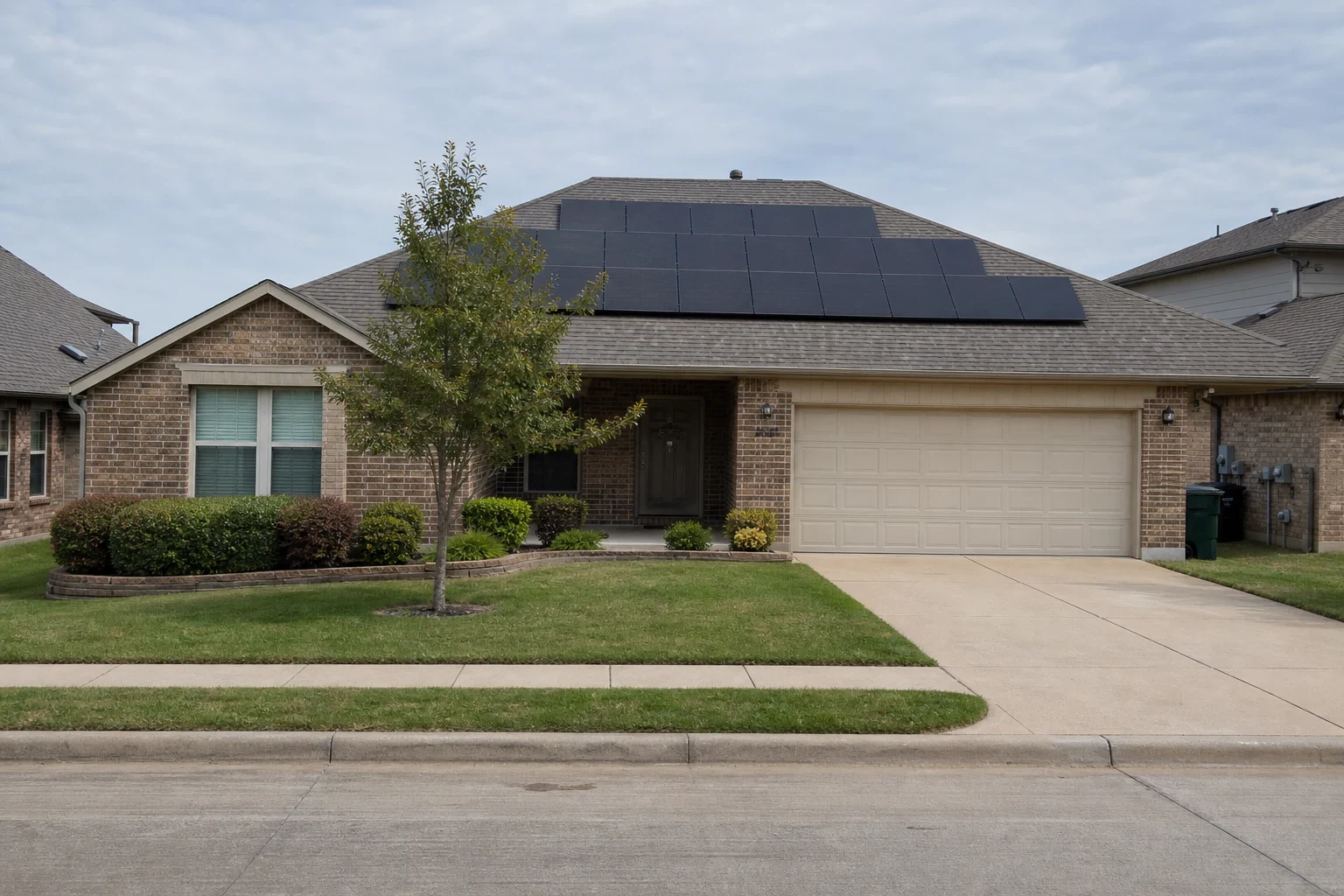
Keep a recent electric bill handy when you phone, and we will talk through what system suits your house and which factors drive the price. We work in Allen and nearby towns including Plano, McKinney and Frisco.