ServicesSolar Repair
Solar Repair in Allen, TX
When your array stops producing after a storm or throws a fault code, we test each part of the system, find the component that failed and fix it. You get photos of what we found, a written estimate and a straight answer on repair versus replacement.
Find the broken link, then fix that part
A solar system is a chain of parts that each fail in their own way. Tempered glass cracks, MC4 connectors corrode, optimizers and microinverters quit, and string inverters shut down when they detect a ground fault. Solar repair means tracing the loss to the exact part and the cause behind it, so you are not paying to swap components that were working fine.
Storms are the usual trigger. North Texas hail can shatter glass outright or leave microcracks in the cells that you cannot see from the yard, and those cracks grow into hot spots over the following months. Wind can loosen module clamps and pull wire management free. After a storm, we help you act quickly and sensibly: make the system safe, document what happened and repair only what is actually broken.
If your panels are intact and just coated in dust or pollen, Panel Cleaning is the better call. If the array is aging and most of the modules are affected, we will tell you plainly and talk through Solar Panel Installation instead.
What a solar repair visit covers
- 01
String and inverter diagnostics
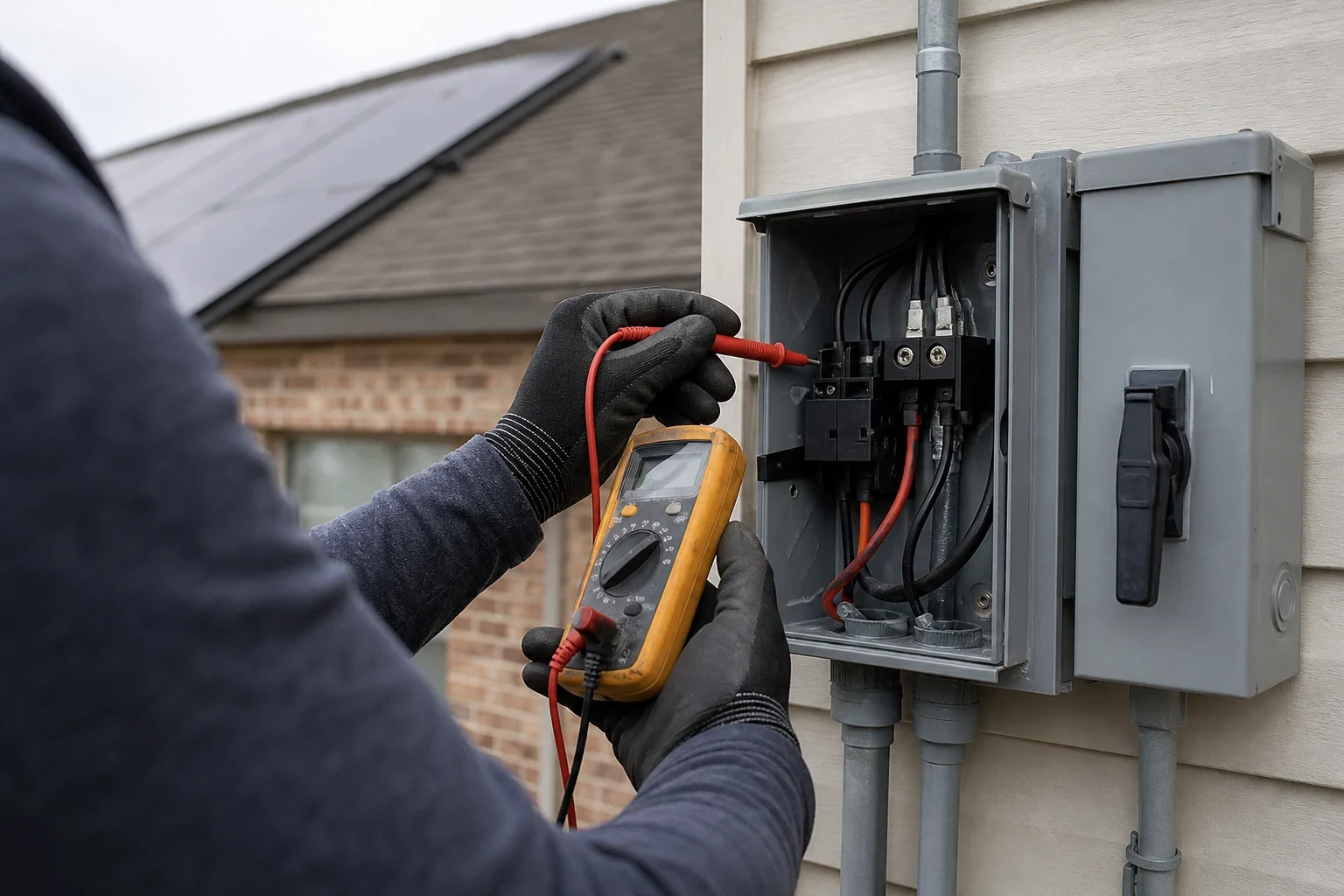
We pull the fault log from the inverter first. Then we meter every string for voltage and amperage and check those numbers against the module specs and the day's sunlight. A weak string tells us where to look before anyone lifts a panel.
- 02
Panel inspection for hail impacts
We check each module for cracked glass, delamination, discolored cells and burn marks on the backsheet. Every affected panel gets photographed, which helps if you file an insurance claim.
- 03
Wiring and connector repair
Loose or corroded MC4 connectors, wire chewed by squirrels and cables rubbing against the roof surface are common causes of ground faults. We replace compromised runs and re-secure wire management so cables stay off the shingles.
- 04
Inverter, optimizer and microinverter replacement
When a power electronics unit has failed, we swap it, re-commission it and confirm it reports correctly to your monitoring.
- 05
Racking and attachment check
Wind loads every clamp and rail. We re-torque loose hardware and reseal the flashing at mount points where sealant has dried and split.
Questions about Solar Repair?
Call(972) 893-1119Signs your system needs a repair visit
Production dropped and the weather didn't
A clear week with noticeably lower output usually means a string, connector or electronics problem, not the sun.
A fault light or error code
Ground fault, isolation fault and arc fault codes are the inverter protecting itself. It will often stay off until the cause is fixed.
Cracked or shattered glass after hail
Even one cracked module lets moisture reach the cells. Keep off the roof and leave the inspection to us.
One panel reads zero in your app
On optimizer or microinverter systems, a single dead unit shows as one blank tile. That is usually a quick, targeted fix.
Wires hanging below the array
Dangling cable or nesting material under the panels means wire management has failed or animals have moved in. Chewed wire jacketing exposes conductors and is a fire risk.
How a repair job runs
- 1
Start with a phone call
Tell us what you see, what your monitoring shows and the date of any storm. If glass is broken, we will walk you through switching the system off at the AC disconnect or rapid shutdown switch.
- 2
On-site diagnosis
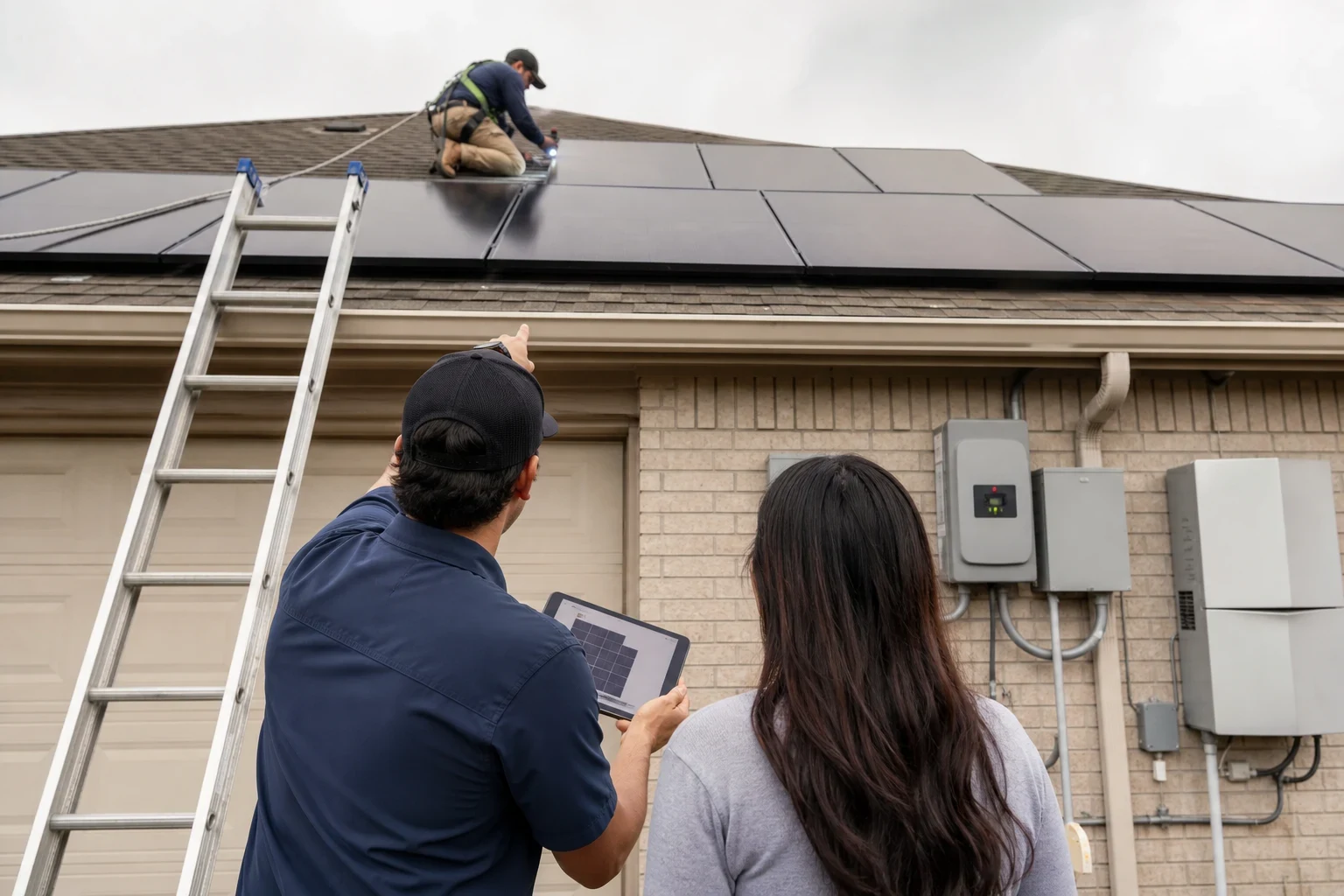
We test at the inverter first, then each string, then individual panels and connections. You get photos of what we found and an explanation of why it failed.
- 3
Written estimate and a clear choice
The estimate lists parts and labor line by line. Where repair and replacement are both reasonable, we lay out the tradeoff and let you decide.
- 4
Repair, test and clean up
We replace the failed parts, re-torque hardware, then verify voltage and production before we leave. Old modules, packaging and wire scraps leave with us.
Why repair estimates vary
Two problems that look alike from the driveway can involve very different work. Re-seating one loose connector on a single-story house takes little time, while replacing several hail-cracked modules on a steep two-story roof needs more crew and more safety setup. We diagnose first and put the figure in writing, so you know it before anything is touched.
- The failed component
- A connector or short wire run costs far less than a string inverter. Optimizers and microinverters fall in between, depending on how many units are involved.
- How many panels were hit, and part matching
- Hail rarely cracks just one module. If your panel model is discontinued, we have to source a compatible replacement with matching electrical specs, which can affect both price and lead time.
- Roof pitch, height and access
- Steep pitches, second stories and panels that must be lifted to reach the wiring underneath all add labor time and safety setup.
- Manufacturer coverage on parts
- Your panel or inverter manufacturer's warranty may cover a failed part, which leaves mainly labor. We check serial numbers and help you file the warranty claim.
Solar repair questions
Is it safe to leave my system running with a cracked panel?
We recommend shutting it off. A cracked module can let water reach live parts and create a ground fault or hot spot. Turn the system off at the AC disconnect or rapid shutdown switch, and leave it off until we have inspected it.
Will homeowners insurance cover hail-cracked panels?
That depends on your policy and deductible, though panels attached to the roof are often treated as part of the dwelling. We are not the adjuster. We record what we find with photos and test readings, then give you an itemized estimate to share with your insurer.
Can you repair a system another company installed?
Usually, yes. Most residential arrays use standard modules, MC4 connectors, string inverters, optimizers or microinverters that we work on regularly. Tell us the brands on the call, and the inverter label or your monitoring app will usually show them.
How do you tell whether the problem is the panels or the inverter?
We test from the inverter outward. If the inverter receives normal string voltage but produces nothing, the inverter is the problem. If a string reads low, we narrow it down to the panel or connection responsible.
My panels are no longer made. Can one still be replaced?
Often, yes. The replacement has to match the original's voltage and current closely enough that it doesn't drag down the rest of the string. On optimizer or microinverter systems there is more flexibility, and we explain the options before ordering anything.
Get your array producing again
Tell us what changed and when, and we will schedule a diagnostic visit at your home in Allen, Plano, McKinney, Wylie or the surrounding area. We are BBB Accredited with an A+ rating, and each repair begins with a written estimate you sign off on before work starts.